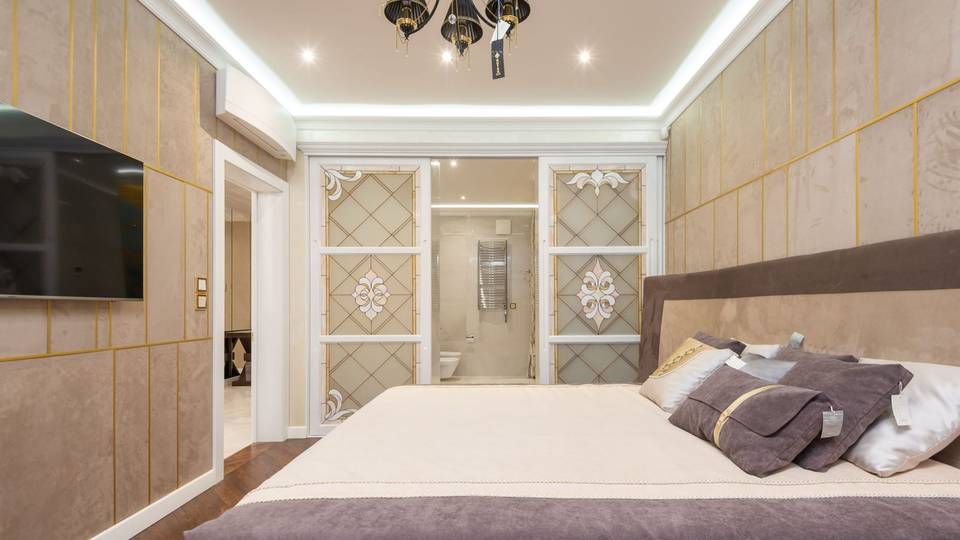
Why a gypsum ceiling?
- Hiding services: AC ducts, electrical cables and sometimes water pipes.
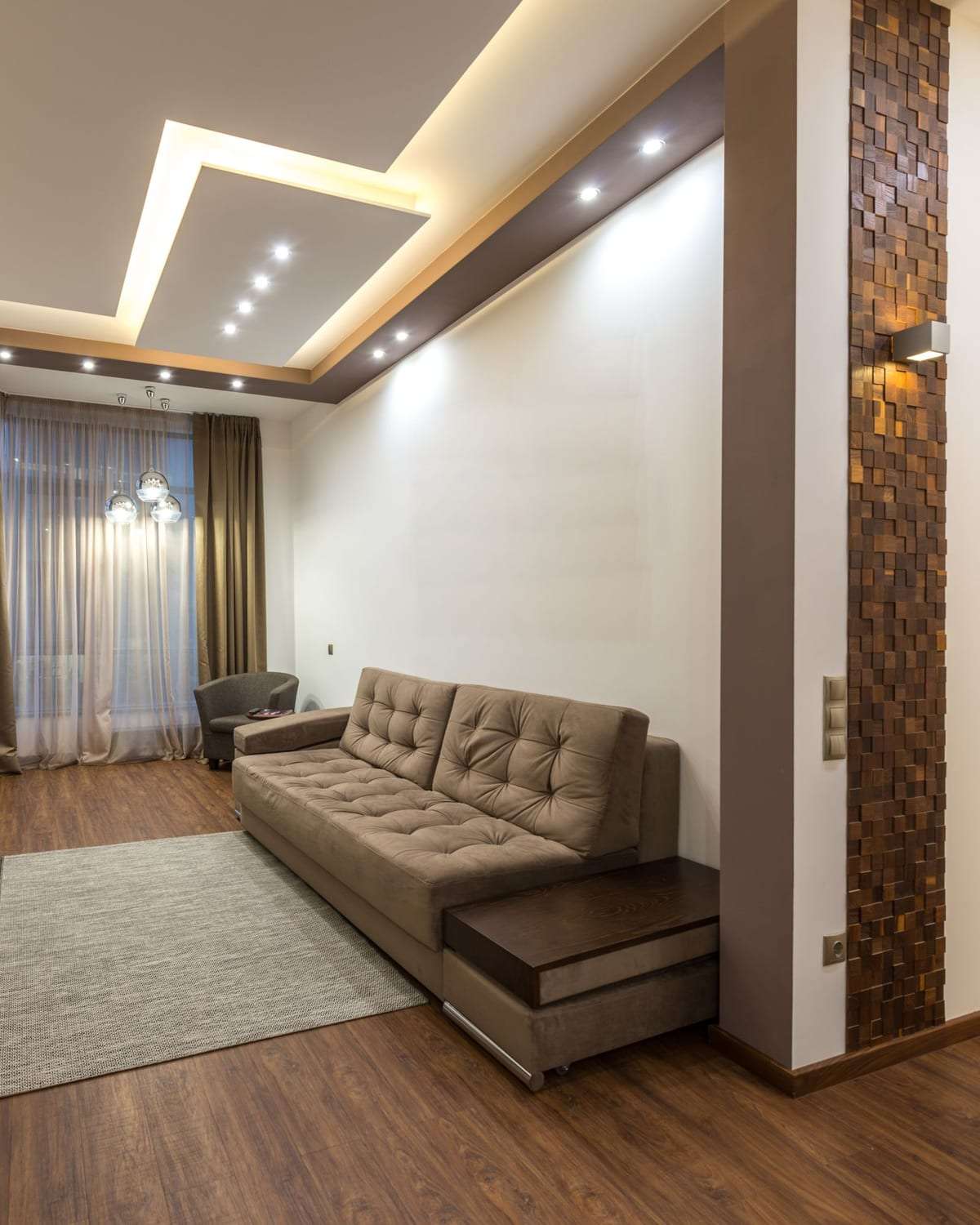
- Shaping the room: levels and patterns that define seating areas or give the majlis its own character.
- Hidden lighting: built-in strips and downlights for soft, indirect light.
- Better insulation: a suspended ceiling with insulation above it can help reduce heat and noise.
Height: don’t sacrifice the feel of the room
A suspended ceiling lowers the room by an amount that depends on what it hides: concealing AC ducts needs more depth than lighting alone. In rooms with already low ceilings, a full suspended ceiling can make the room feel cramped.
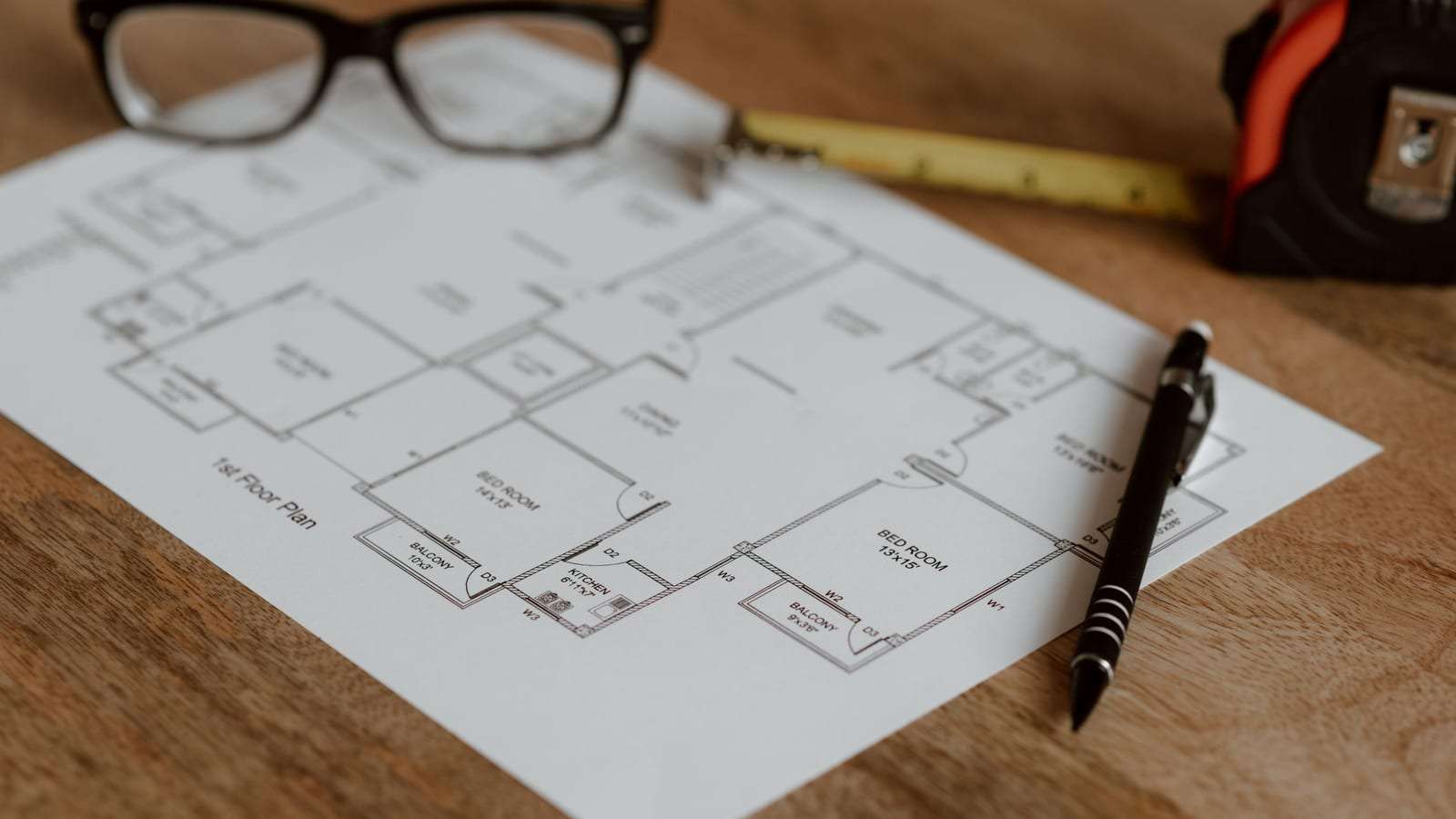
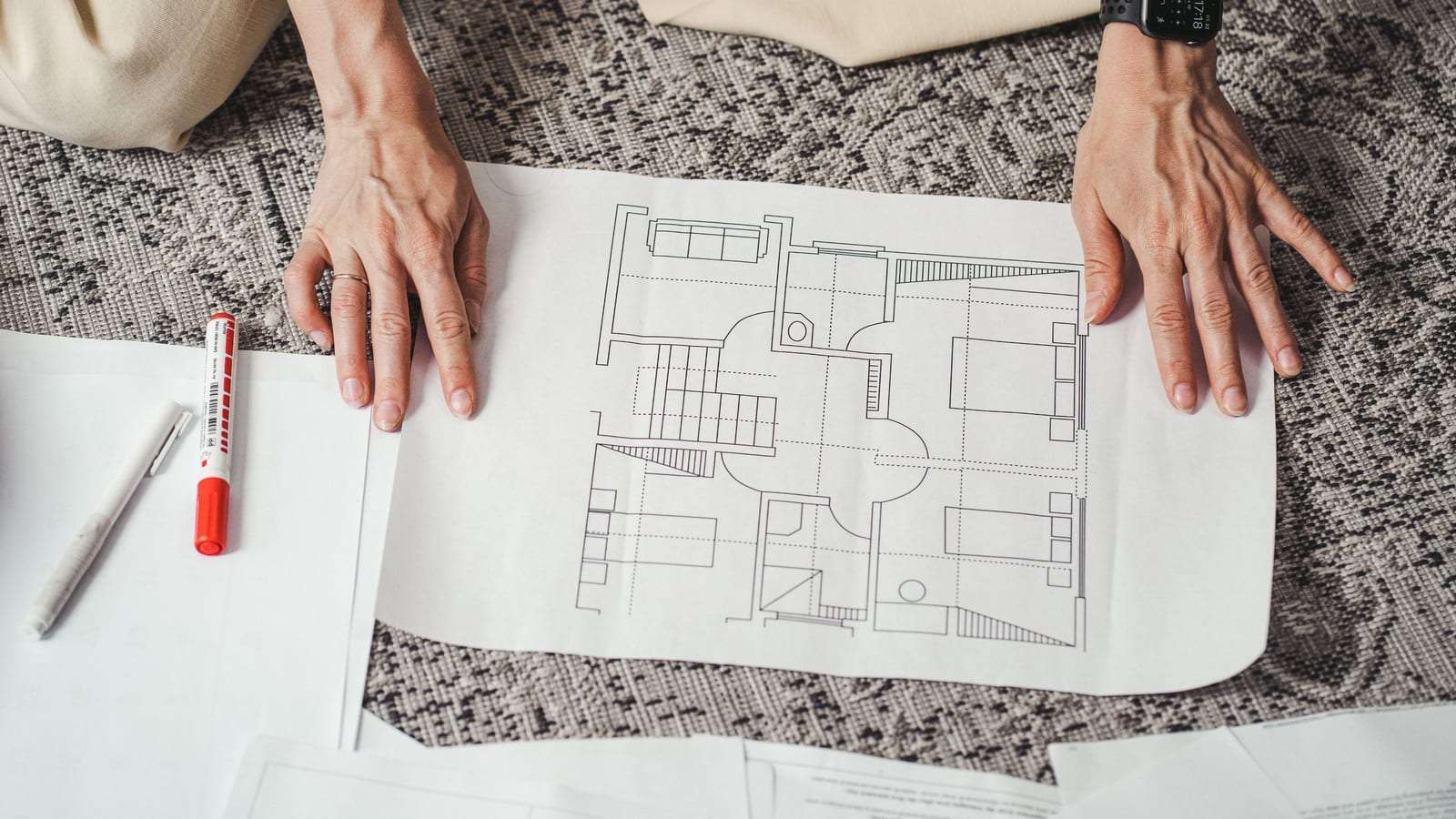
The answer in many rooms is a suspended ceiling around the edges only — a frame round the room that hides lighting and ducts — leaving the centre at its original height. That adds depth and a sense of space. Ask the company for a drawing showing the heights before starting.
Choose the right boards for the space
Not all gypsum boards are alike. There are standard boards for dry rooms, moisture-resistant boards for bathrooms, kitchens and humid coastal cities, and fire-resistant boards for certain places. Standard boards in a bathroom mean swelling, peeling and mould after a while.
Ask the company which boards it uses in each room, and about the metal frame and its rust resistance — especially in coastal cities such as Jeddah, Dammam and Yanbu, where a poor frame rusts and the marks show through the ceiling.
Cracks: why they appear and how to avoid them
The most common complaint about gypsum ceilings is cracking at board joints or in corners. Common causes: a weak or widely spaced frame, joints not finished with the right tape and compound, expansion and contraction with heat, moisture, or vibration from a ceiling-mounted AC unit.
So ask about frame spacing, how joints are treated, movement joints in large ceilings and how AC units are fixed. Let the gypsum dry well before painting.
Hidden lighting: plan it before the gypsum
Hidden lighting is designed with the ceiling, not after it. Decide where you want light: a concealed strip round the edges washing the ceiling softly, downlights over seating areas, or accent lighting on a wall, artwork or bookshelves. Each needs a different shape in the gypsum.
Think about colour temperature: warm light suits majlis rooms and bedrooms and feels relaxing; neutral white suits kitchens and work areas. Avoid too many strong downlights over seating — they tire the eyes and cast harsh shadows on faces.
Put lighting on separate circuits you can control, so you can choose calm light for evenings and bright light for occasions. If you want dimming, choose lamps and drivers that are compatible with it.
Electrics and safety
Hidden lighting means cables and drivers inside the ceiling, in a place that’s hard to reach later. So a qualified electrician must install it, with cables sized for the load, secure connections inside boxes, and drivers placed where they can be reached for maintenance — not buried behind the gypsum.
Drivers and lamps produce heat, so they need ventilation and clearance from materials. Ask the company about this, and about protection on the board for the new circuits.
Access hatches: don’t forget them
Everything hidden above the ceiling may one day need maintenance: the indoor AC unit and its ducts, lighting drivers, water valves and electrical connections. Without access hatches, any small fault means breaking part of the ceiling, then reinstating and repainting it.
Ask for access hatch positions to be marked on the drawing, near everything that needs maintenance, with a design that blends into the ceiling as far as possible.
Gypsum and air conditioning
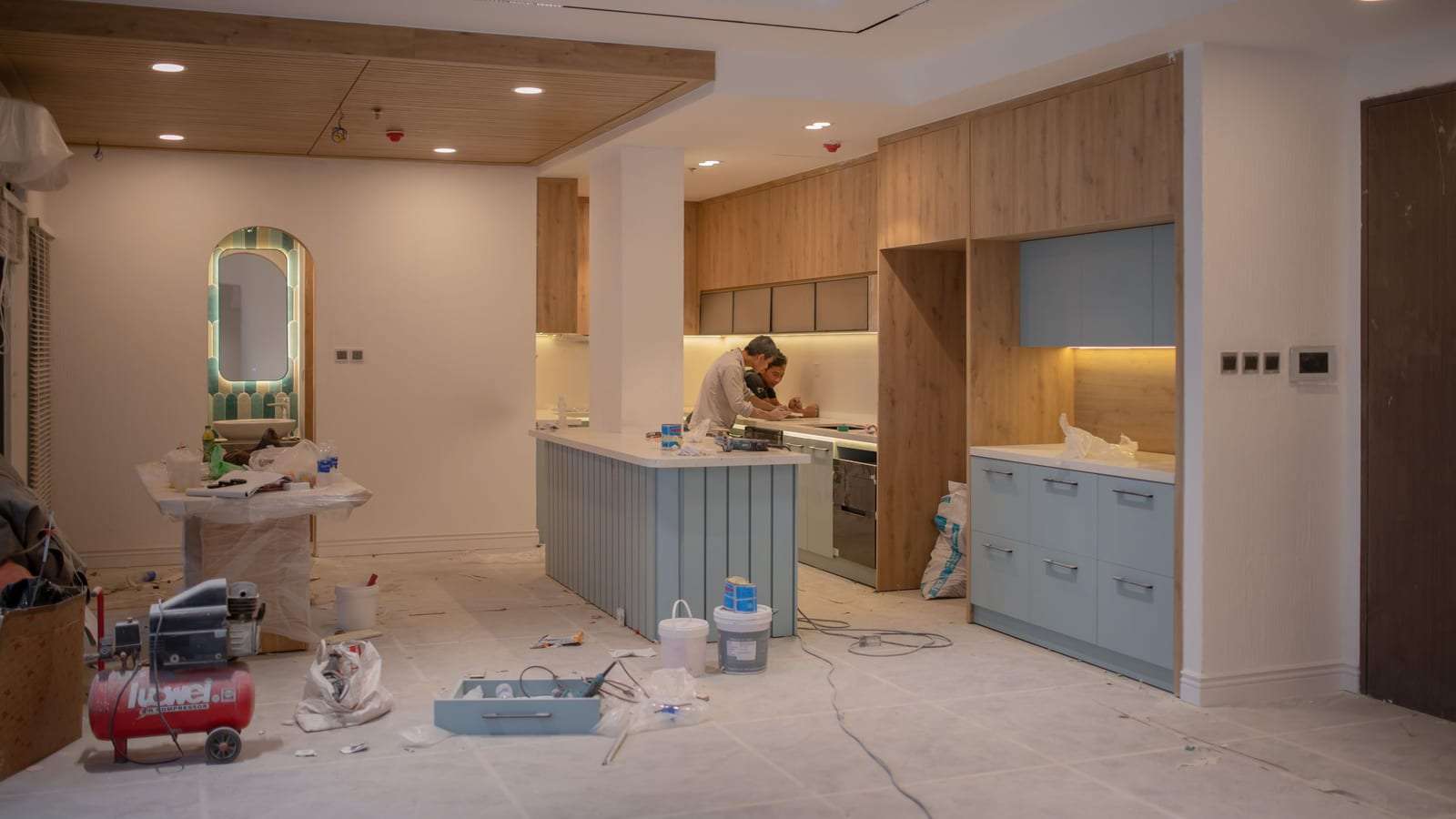
Many gypsum ceilings in Saudi homes are designed to hide concealed AC units or central AC ducts. The gypsum company and whoever fits the cooling system need to coordinate from the start: where the indoor unit goes, the duct routes, supply and return grille positions, and the condensate drain route and its fall.
A common mistake is building the gypsum first and then finding the duct won’t fit, the return grille is in the wrong place, or the condensate line has no fall and leaks onto the ceiling. Ask for AC positions to be drawn on the ceiling plan before starting, and for the condensate line to be tested before the gypsum is closed.
Style: from simple to ornate
Tastes vary widely: some families love ornate ceilings with several levels, cornices and geometric patterns, especially in the majlis. Others prefer a simple contemporary look: a flat ceiling with a clean frame and a single light strip. In homes with a Najdi or Hijazi character, simple arches and calm lines may suit better than heavy decoration.
Remember that a very ornate ceiling can look dated after a few years and collects dust in its details, while a simple one stays suitable longer. Choose what suits the room and the rest of the house, not what looks good in a single photo.
Questions to ask before the work
- How far does the ceiling drop in each room? Can I see a drawing with the heights?
- Which boards in each room? Are moisture-resistant boards used in bathrooms and kitchens?
- What type of metal frame? Is it rust-resistant?
- How do you treat joints and corners?
- Who does the electrics and lighting, and where will the drivers go?
- Where are the access hatches?
- Is painting included? What warranty covers cracks?
FAQ
Does gypsum suit bathrooms?
Yes, with moisture-resistant boards and good ventilation, plus an access hatch for the services above.
Why do cracks appear in gypsum ceilings?
Usually a weak frame, poorly finished joints, moisture or vibration. Ask about the warranty on cracks.
Can the gypsum ceiling be painted straight after installation?
No — let the compound and joints dry well first, then apply a suitable primer, or the joints will show or crack under the paint.
Is hidden lighting enough on its own?
In a majlis it may be enough for atmosphere, but work rooms such as the kitchen need direct lighting too.
How long does a gypsum ceiling take?
It depends on area, design, lighting, drying and painting. Ask for a written timeline.
Can hidden lighting be added to an existing ceiling?
Sometimes, with a new frame round the edges, but planning it with the ceiling from the start is easier.
How do I clean hidden lighting and the ceiling?
Dust gently with a dry tool, avoid much water near lights and drivers, and switch off the power before cleaning close to them.
Do I need a designer?
For large majlis and living rooms a designer’s view on lighting layout and levels helps. Read about interior design.
This guide is general information, not engineering or legal advice. Any structural change needs a qualified engineer and a municipal permit, and electrical, plumbing and gas work must be done by qualified, licensed technicians.