Tiles, porcelain, marble, parquet
Flooring: a choice that suits the climate and use, and lasting installation
The floor is what you see and touch most in a home, and the hardest thing to change once you live there. So the choice deserves time: a material that suits the heat, the dust and how the family lives, laid level with no voids under the tiles and no joints that crack after months.
With SaudiRenovation you describe the area, the rooms and the type of floor you’re considering, and your request reaches flooring and finishing companies in your city who contact you with offers.

What does flooring work include?
Good floor laying starts long before the first piece goes down:
Strip-out and preparation
Removing the old floor if needed, checking the base and levelling it.
Screed and falls
A level screed, and correct falls in bathrooms, kitchens and balconies.
Laying
Laying tiles, marble or parquet with movement joints where they belong.
Finishing
Grout, skirting, thresholds, and polishing or sealing marble where needed.
Offers usually exclude moving heavy furniture or adjusting doors if the floor level rises, unless stated. Ask how high the new floor will be before work starts, and how level changes between rooms will be handled.
When should you think about a new floor?
Hollow tiles that ring when tapped, cracked or lifted pieces, crumbling black grout, or an uneven floor that pools water when mopped. These point to old installation or a problem underneath.
Sometimes the reason is aesthetic: dated tiles that break up the house, or wanting one continuous floor between living room and kitchen to make the home feel larger and calmer.
If a floor near a bathroom or kitchen suddenly lifts, there may be a leak underneath — check it before replacing. Read signs of hidden water leaks.
In older homes there may be water or drain pipes under the tiles that need replacing, so use the new floor as a chance to check them — fixing them after a new floor means breaking it again.
Porcelain, marble or parquet?
Porcelain is the most common choice in Saudi homes: hard, low-absorption, easy to clean of dust, and available in large formats with fewer joints. Matt finishes are less slippery than gloss — important in entrances and kitchens.
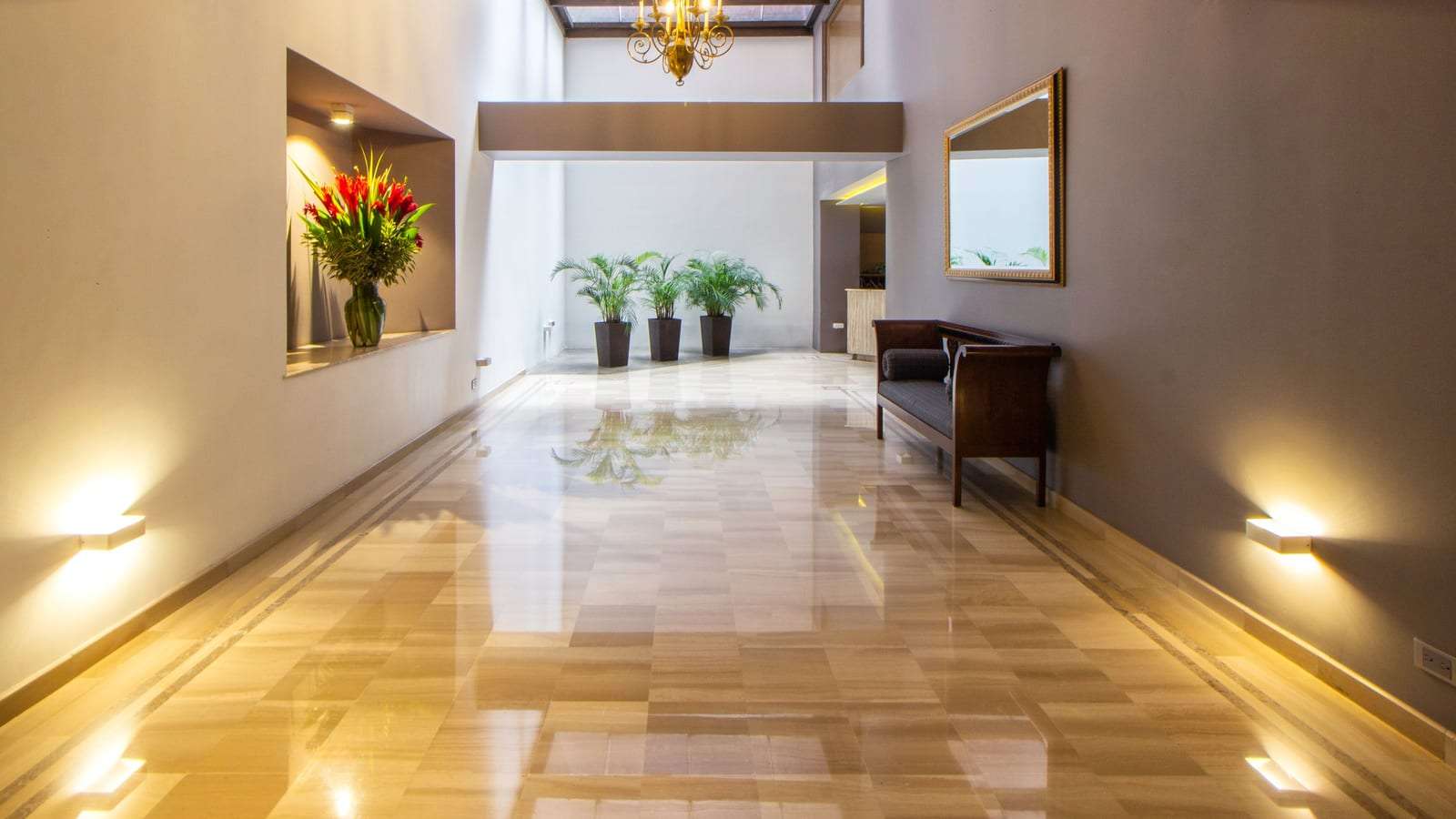
Natural marble looks grand in entrances and the majlis but is more sensitive to stains and scratches and needs sealing and periodic polishing. Parquet and timber floors bring warmth to bedrooms but are affected by humidity and water, so ask which types suit the climate and how they are fixed.
Ceramic is an economical choice for walls and lighter-use areas. Whatever the material, precise levelling, good adhesive and movement joints decide how long the floor lasts. Read choosing floors in a hot climate.
On colour and layout: light floors make rooms feel larger and show dust less than very dark ones, and large formats need a perfectly level base. Ask the company to set out from the middle of the room or the main doorway, so small cut pieces don’t land where they show most.
The usual sequence
- Survey and measuring
Measuring areas and checking the existing floor and door levels.
- Strip-out and levelling
Removing the old and preparing a level base.
- Laying
Laying pieces with a planned layout for joints and cuts.
- Grout and skirting
Filling joints and fitting skirting and thresholds.
- Cleaning and handover
A final clean and a check for level and hollow pieces.
Replacing floors while you live at home
A new floor means emptying the room completely, and plenty of dust from removal and cutting. Work in phases, keep doors closed, and ask for wet cutting or low-dust tools where possible.
After laying, don’t walk on the tiles or put furniture back until the drying time the company gives has passed — early load causes hollow tiles.
With children or older relatives at home, agree a safe, clean route every day, and protection for the new floor in corridors until work elsewhere is finished.
Questions to ask the company
- What adhesive and laying method will you use?
- Are levelling and removing the old floor included?
- How will you lay out joints and cuts in the room?
- Will you leave movement joints, and where?
- How much will the floor level rise, and do doors need adjusting?
- Who supplies the tiles, and how much extra for cuts and waste?
- What warranty covers hollow or cracked pieces?
Warning signs
- Laying tiles on an uneven base without levelling.
- Ignoring falls in bathrooms and kitchens.
- Refusing movement joints in large areas.
- An offer that doesn’t mention adhesive or skirting.
- Pressure to put furniture back before the floor has set.
What drives the cost of flooring?
- The area, the number of rooms and their shape.
- The material, its grade and the size of the pieces.
- Removing the old floor and levelling.
- The pattern: diagonal cuts, designs or marble borders.
- Skirting, thresholds, polishing and sealing.
- Moving furniture, protecting other rooms and removing waste.
We don’t list prices. Ask for written offers with the same material, area and laying method.
Questions about flooring
Can porcelain go over old tiles?
Sometimes, if the old floor is sound and level and door heights allow. Decide after the site visit.
Is parquet suitable in coastal cities?
It can be, with a moisture-resistant type, correct installation and good ventilation.
What’s the best floor for a kitchen?
Matt or textured porcelain — low-absorption, easy to clean and less slippery.
Why does a tile sound hollow?
Usually because of a void in the adhesive under it — an installation fault.
Does marble need maintenance?
Yes — sealing against stains and periodic polishing, depending on use.
Do I need new skirting with the floor?
Usually yes — to match the new floor and hide the movement joints at the walls.
How long does laying a floor take?
It depends on the area, removal and drying. Ask for a written timeline.
Related services
Helpful guides
Request flooring offers
Describe the area and type of floor, and let companies contact you.