What matters in the Saudi climate?
- Easy cleaning: dust is present all year, so a floor that wipes clean easily saves daily effort.
- Moisture resistance: essential in bathrooms and kitchens, and throughout the house in coastal cities.
- Resistance to scratches and traffic: majlis and living rooms see heavy traffic and heavy furniture.
- How warm or cool it feels: some materials stay cool underfoot — pleasant in summer, less so on winter nights.
- Slip resistance: especially in bathrooms, kitchens and entrances, and in homes with children or older people.
- Long-term maintenance: some materials need regular polishing or treatment.
Porcelain: the safe choice in most homes
Porcelain is one of the most common floors in Saudi homes, for clear reasons: it absorbs little water, resists scratches and stains, is easy to clean and handles heavy traffic. It comes in many sizes and looks, including marble, timber and stone effects.
Large tiles reduce joints and give a sense of space, but need a very level base and precise workmanship, or height differences appear between tiles. For bathrooms, kitchens and entrances choose a slip-resistant surface, not a high gloss.
Ceramic: economical for walls and less-used rooms
Ceramic is usually lighter and cheaper than porcelain but absorbs more water and is less resistant to scratches and breakage. So it suits walls more than floors, or low-traffic rooms.
If you choose it for a floor, ask about its traffic rating and choose what suits the room.
Marble and natural stone: luxury that needs care
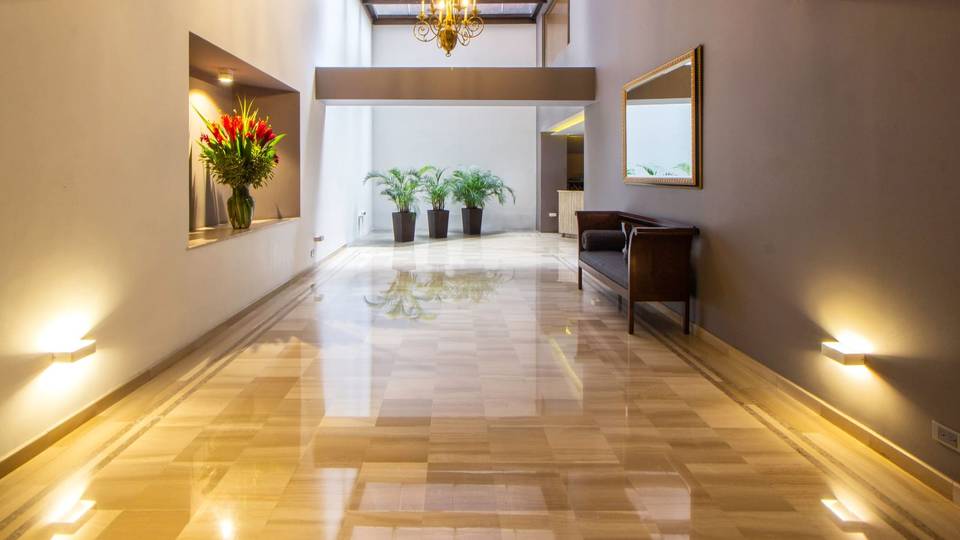
Marble is strongly present in majlis rooms, entrances and stairs in Saudi homes, for its beauty, its sense of luxury and its coolness in summer. But it is a natural stone, porous in many types, affected by acids such as lemon and vinegar and some cleaners, and it can stain or lose its shine without care.
So it needs sealing after installation, periodic polishing and suitable cleaners. It is usually heavier and more expensive to install than porcelain. If you love the look but want less maintenance, marble-effect porcelain is a choice many make.
Timber and parquet: warmth that needs caution
Natural timber and parquet bring warmth and beauty, especially in bedrooms in cities with cold winters such as Tabuk and Abha. But timber reacts to humidity and water — swelling or cupping — fades in direct sun and scratches.
So it doesn’t suit bathrooms, kitchens or entrances, and needs more thought in humid coastal cities. There are timber-look alternatives with higher water and scratch resistance; ask about each one’s properties before choosing.
Vinyl and composite floors
Composite and vinyl floors are newer options; some are water-resistant, comfortable underfoot, warmer than tile and quicker to install, and some go over the old floor without removing it. That makes them suitable for a quick refresh in some cases.
But quality varies widely, and some types are affected by extreme heat and direct sun. Ask about heat tolerance, wear layer and thickness, the installation method and suitability for the room.
The right floor for each room
- Majlis and entrances
Large porcelain, or marble for those who want luxury and accept the upkeep, with rugs in the seating area.
- Living rooms
Easy-clean porcelain, or a composite floor suited to the traffic.
- Bedrooms
Timber, parquet or composite for more warmth, especially in cities with cold winters.
- Kitchen
Porcelain that resists slipping, stains and grease.
- Bathrooms
Slip-resistant tiles over sound waterproofing.
- Roofs and courtyards
Exterior tiles that withstand sun and heat, slip-resistant.
Colours and dust
Colour affects cleaning more than many expect. Very dark floors show dust and footprints quickly, and bright white gloss shows stains and streaks. Earthy tones, light greys and beiges, and surfaces that aren’t too glossy, hide everyday dust better and suit homes in dusty cities.
Light grout gets dirty quickly in entrances and kitchens, so choose a colour close to the tile or slightly darker, and ask about a stain-resistant grout.
Replacing floors in an occupied home
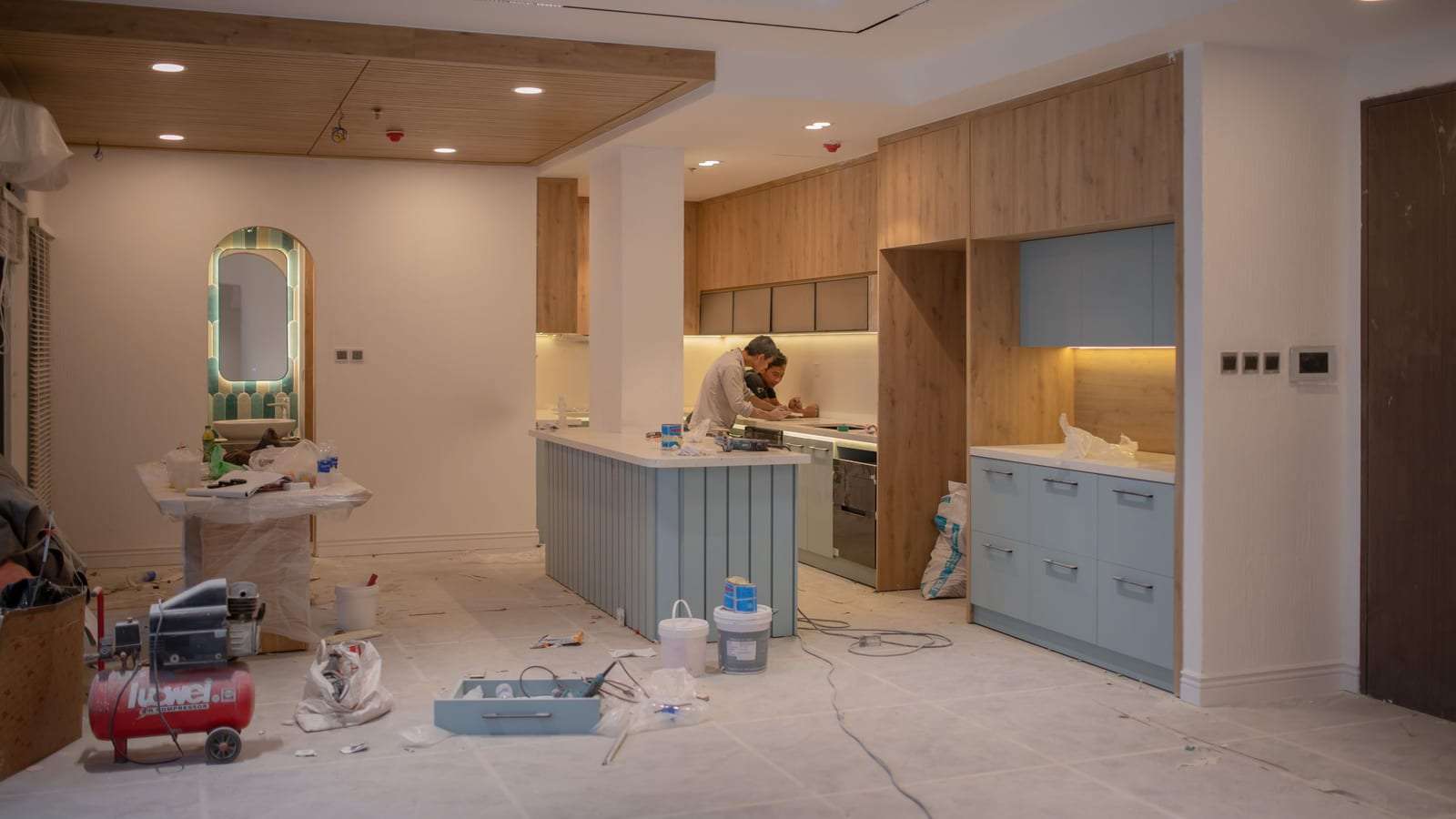
Removing old tiles raises a lot of dust and noise and means clearing the room of furniture. If you live in the house, arrange with the company to work room by room, with the work area sealed off and the rest of the house protected, and enough time for the adhesive to set before walking on the new floor or moving furniture back.
Changing the floor level may mean trimming doors or adjusting thresholds, so ask about it in advance.
Installation: half the result
The most beautiful tile looks bad on an uneven base, with irregular joints, or with too little adhesive leaving hollow spots. Ask the company: how will you prepare the base? Will you remove the old floor or lay over it? Which adhesive? How wide are the joints?
Tiles expand and contract with heat, so large areas, roofs and sun-exposed places need movement joints, or cracks and tenting appear over time. Ask for spare tiles from the same batch — you may need them to replace a broken tile years later.
At handover, tap the tiles lightly to hear hollow spots, and look at the joint lines and tile levels in raking light.
FAQ
What is the best floor for a Saudi home?
There’s no single floor for the whole house. Porcelain is a safe choice for most rooms, timber or composite for bedrooms, and slip-resistant tiles for bathrooms and kitchens.
Can a new floor go over the old one?
In some cases, if the old floor is level and sound, but it raises the floor level and affects doors. Ask the company.
How long does replacing a room’s floor take?
It depends on area, removing the old floor and adhesive setting time — ask the company for a written timeline.
Is marble suitable for a kitchen?
It needs care because acids and stains affect it; porcelain is an easier choice in a kitchen.
Is timber suitable in Jeddah or Dammam?
It needs caution because of humidity; water-resistant alternatives may suit better.
Are large tiles better than small ones?
They reduce joints and feel spacious, but need a very level base and precise work; small tiles are easier in bathrooms with falls.
How many spare tiles should I order?
Ask the company to estimate waste and breakage, and keep a small quantity for later replacements.
Do floors suffer in direct sun?
Some materials fade or expand, so ask about each one’s sun tolerance before using it near windows or outdoors.
This guide is general information, not engineering or legal advice. Any structural change needs a qualified engineer and a municipal permit, and electrical, plumbing and gas work must be done by qualified, licensed technicians.